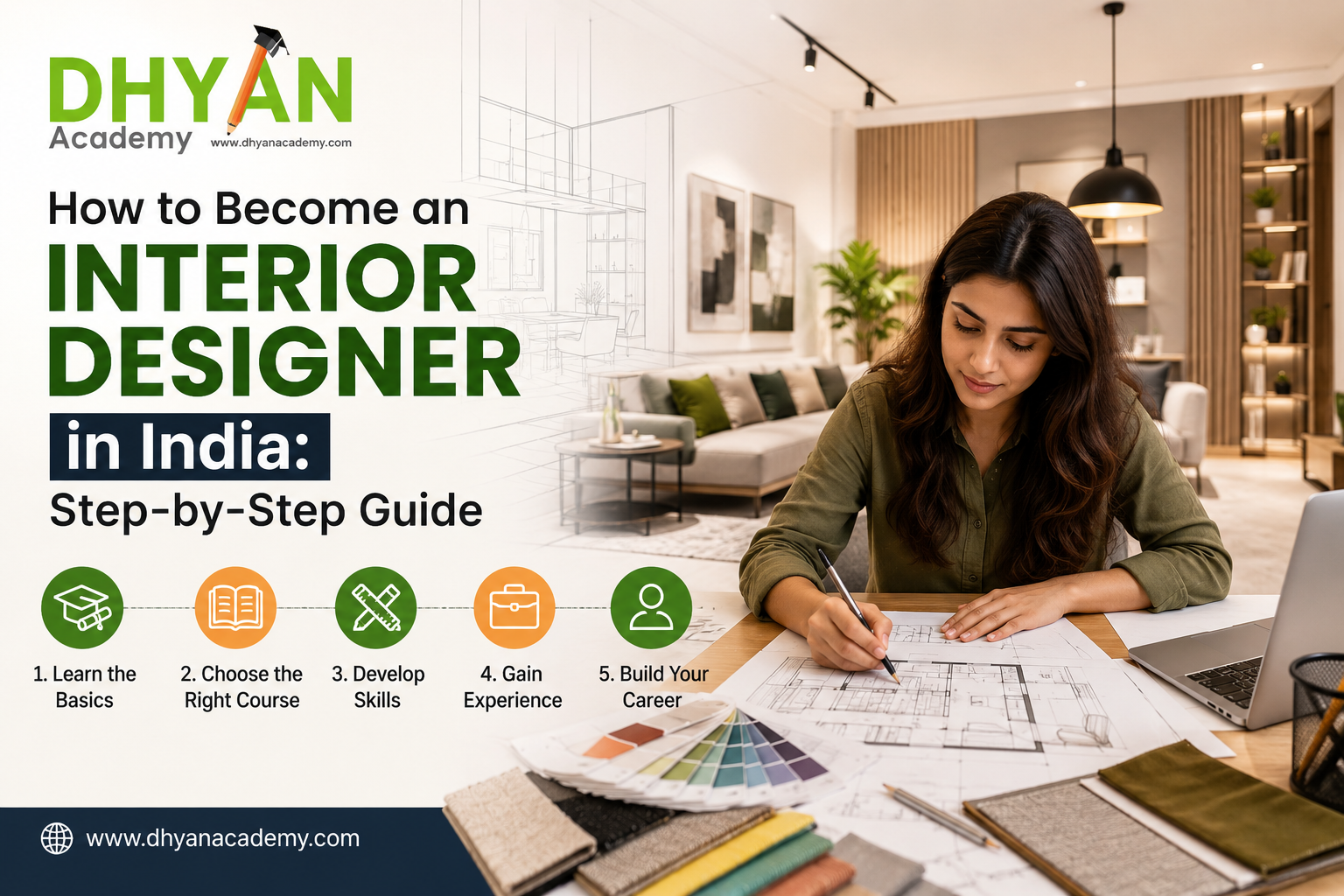
Interior design is a job that uses both your heart and your head. It is a mix of making things look pretty and making sure things actually work well. Interior designers work on all sorts of places like homes, offices, hotels, shops and restaurants. You help people make their rooms feel cozy, look good and serve a purpose.
Because more people are building houses and new businesses in India, there are jobs for interior designers. Being a good interior designer takes more than just having a good eye for style. You also need to know the side, learn how to use computer tools, get real experience and build a collection of your best work.
If you want to start this career, this guide will show you how to become a designer in India.
Step 1: Understand What an Interior Designer Does
Before you jump in, you should know what the job is like. An interior designer listens to what a client wants. Then makes a plan that looks great but also stays within a budget.
The daily tasks often include:
- Understanding client requirements
- Preparing floor plans and layouts
- Planning furniture arrangements
- Selecting colours, materials, finishes and lighting
- Creating 2D drawings and 3D models
- Preparing presentations and design concepts
- Coordinating with architects, contractors and vendors
- Visiting project sites
- Monitoring design execution
So interior design is not about picking out pretty pillows. It is about planning, drawing, knowing your materials and talking to different people to get the job done.
Step 2: Complete Your Education
If you want to be an interior designer, you can start planning right after school. Once you finish your grade, you can look for a diploma, a certificate or a degree in interior design.
Some paths you can take include:
- Diploma in Interior Design
- Bachelor of Design (B.Des)
- Bachelor of Interior Design
- B.Sc. in Interior Design
- Specialised design programmes
Every school has different rules for getting in, so make sure to check what they ask for before you apply.
Step 3: Choose the Right Interior Design Course
Picking the course is a huge step. A good course should teach you the basics of design, how to use software and how things work in the world.
If you are looking for an Interior Design Course in Hyderabad, you should compare schools by looking at:
- Course curriculum
- Practical training
- Software coverage
- Faculty experience
- Live project exposure
- Portfolio development
- Internship opportunities
- Industry-oriented training
- Placement or career guidance
Short courses are great if you want to learn a skill quickly. A full degree is better if you want to learn everything from the ground up.
Step 4: Learn Interior Design Fundamentals
Before you start using computers, you need to learn the basic rules of design.
You should focus on:
Space Planning
Learn how to use a room so people can move around easily and everything has a place.
Colour Theory
Learn how different colours change the way a room feels.
Lighting
Learn how to use light to make a space look better and work better.
Finishes
Learn about things like wood, glass, stone, fabric and metal.
Furniture and Ergonomics
Learn how the size and shape of furniture affect how comfortable people are.
Knowing these basics helps you make rooms that actually work than just following what is trendy.
Step 5: Develop Sketching and Visualization Skills
Sketching is a deal for interior designers. It helps you show your ideas to people quickly. You should practice drawing floor plans, furniture and simple sketches.
You also need to practice visualization. This means being able to close your eyes and imagine how a room will look once the lights, colours and furniture are inside. With all the new computers being able to draw by hand is still a very helpful skill when you are talking to clients.
Step 6: Learn Industry-Standard Design Software
Computers are a part of interior design today. Learning how to use the tools will help you make 3D models and beautiful pictures of your ideas.
Some tools you will likely use are:
- AutoCAD – for 2D drawings and technical plans
- SketchUp – for 3D models
- 3ds Max – for detailed 3D work
- V-Ray – to make pictures look real
- Revit – for building plans
- Photoshop – to edit pictures and make presentations
Different jobs might ask for different tools, but the more software you know, the better your chances of getting hired.
Step 7: Gain Practical Experience
You cannot learn everything by sitting in a classroom. To be an interior designer, you need to see how real projects happen.
Try to find an internship or a trainee job at:
- Interior design studios
- Architecture firms
- Real estate companies
- Furniture companies
- Construction companies
- Design firms
- Commercial design firms
When you do an internship, you will learn how to talk to clients, how to measure a room, how to pick materials and how to stay on budget. This helps you see the difference between a drawing on paper and a real room in a house.
Step 8: Build an Interior Design Portfolio
Your portfolio is the most important thing you will show to a boss or a client. It shows them how you think and what you can actually do.
A good portfolio should have:
- Hand sketches
- Floor plans
- Furniture layouts
- 3D models
- Rendered images
- Material boards
- Colour schemes
- Projects
- Commercial design concepts
- Internship or live-project work
If you are just starting out and do not have real clients yet, you can make up your own projects to show off your talent. Do not just show the pretty picture; show how you got there from the beginning.
Step 9: Improve Your Soft Skills
Interior designers talk to clients, contractors, architects, vendors and many other professionals every day. Because of this, good communication and interpersonal skills are very important.
Work on:
- Communication
- Time management
- Teamwork
- Problem-solving
- Client handling
- Budgeting
- Negotiation
- Attention to detail
- Project management
A designer might come up with an idea, but making that idea real needs good coordination and professional communication.
Step 10: Start Your Interior Design Career
After you finish your education, learn your software, get experience and build a portfolio, you can start looking for entry-level jobs.
Possible career roles include:
- Junior Interior Designer
- Interior Design Assistant
- 3D Visualizer
- CAD Designer
- Space Planner
- Residential Interior Designer
- Commercial Interior Designer
- Furniture Designer
- Design Consultant
As you get experience, designers can move into senior roles. You can also choose to specialize in things like residential, hospitality, retail or commercial design. Some designers even decide to start their design consultancy.
Career Opportunities in Interior Design
Interior designers can find work in different areas. These areas include interiors, corporate offices, hotels, restaurants, retail outlets, healthcare spaces, exhibition design and real estate.
People with a lot of experience might choose to work as freelancers or start their own business. If you build relationships with clients, create a great portfolio and learn project management, you can move toward running an independent practice.
Why Choose an Interior Design Course in Hyderabad?
Hyderabad is seeing a lot of residential, commercial, real estate, hospitality and architectural projects. This creates chances for people who have design and technical skills. There are also ways to learn in the city from short classes to long full courses.
If you are just starting out, an Interior Design Course in Hyderabad can give you a way to learn about design concepts, drafting, 3D visualization, software and how real projects work. When you pick a course, do not just look at how it lasts. Instead, look at how good the training’s, if you get to do hands-on work.
Final Thoughts
Becoming a designer in India is a process that happens one step at a time. You need education, creativity, technical skills, software knowledge, practical experience and a desire to keep learning. You should start by learning the basics, picking the course, mastering the software used in the industry, getting practical experience and making a professional portfolio.
If you really want to join this field, signing up for a career-focused Interior Design Course in Hyderabad can be a move to learn the skills you need for real design projects. If you practice often, get out into the industry and build a portfolio, you can have a wonderful career in the growing interior design sector in India.